
सहिद, सन्त र गद्दारहरु | Martyrs, Saints & Sellouts
विगततिर फर्केर हेर्ने दृष्टि
निक सेफर्डको निबन्ध
सहिदहरू… सन्तहरू… गद्दारहरू… यस प्रदर्शनीको शीर्षकमा भएका यी शब्दले हामीलाई फगत हेर्नमात्र नभई ‘फर्केर हेर्ने’ निश्चित दृष्टिकोण निर्माण पनि गर्न आह्वान गर्छन् । तस्बिरमा वर्तमान कालमा लेखिएका तिनका विवरण देखिए पनि हाम्रो वर्तमान ती तस्बिरको समयभन्दा निकै फरक छ । यसबीचको समयको अन्तराल, दूरी तथा बीचका वर्षको सापेक्षतामा घटनाहरूबारे सोच्न हामी आमन्त्रित छौँ । क्यामेरासँग नजर जुधाइरहेको सिंहजस्तो नवजवान के भयो होला ? ब्ल्याक इकोनोमिक इम्पावरमेन्ट (बिईई)का लाभग्राही ? क्याबिनेट मन्त्री ? गरिब र सीमान्तकृत ? वा उसको भविष्य कुनै बन्दुकको गोलीले उडाइदियो ? सडकमा हिँडिरहेका तीन महिलालाई रङ्गभेदपछिको दक्षिण अफ्रिकाले के दियो ? उनीहरू साहसी र दृढ अधिवक्ता वा अभियन्ताजस्ता देखिन्छन् । उनीहरू पछाडिको भवन कुनै आधिकारिक वा सरकारी कार्यालय हो । उनीहरू अदालततर्फ जाँदैछन् । लुकेर बसेको राज्यशक्तिको सामना गर्न लागेका छन् । तर उनीहरू डराएका छैनन्, भविष्य अब उनीहरूकै हो (उनीहरूको मुस्कानले हामीलाई त्यही भन्छ) । त्यसो भए, के त्यस्तै भयो त ? हामीलाई साधारण विवरण, फराकिलो चित्रमात्र थाहा छ, तर व्यक्तिगत जीवनबारे खै, ती हरेक महिलाको कथा के भयो ? के–के आशा पूरा भए, कस्ता सम्झौता भए, कस्ता निराशा आइलागे ? इतिहासको एउटा कालखण्ड परिभाषित गर्न सङ्घर्षको धारणाबारे हाम्रो गहिरो समर्पणका साथ हामीलाई ‘सङ्घर्ष’ शब्दका थुप्रै अर्थबारे याद दिलाइन्छ । एउटा हुन्छ– विशेष ‘सङ्घर्ष’ वा महासङ्घर्ष (अङ्ग्रेजीमा भन्दाखेरी क्यापिटल S बाट सुरू हुने सङ्घर्ष) । र अरू हुन्छन्– थुप्रै ससाना सङ्घर्ष, जसले हाम्रा दैनिक जीवन भरिएका छन् । हामीले दैनिक जीवनचक्रको आशाविनाको सङ्घर्ष र त्यसविपरीत भरोसाका साथ गरिएको ती तीन महिलाका तस्बिरबाट चम्किरहेको आशाजस्तो सङ्घर्ष गर्नुमा के फरक छ भन्ने पनि हेक्का राख्नुपर्छ ।
बेनी गूल, आदिल ब्राडलो र जुबेदा भाली सबै उत्कृष्ट फोटोग्राफर हुन् । यस प्रदर्शनीमा राखिएका उनीहरूका तस्बिरले अशान्त र धेरै दस्तावेजीकृत समयलाई दर्शाउँछन् । सुलभ प्रभुत्वशाली कथाको पासोबाट बच्ने तरिकाले यी कामलाई प्रस्तुत गर्नु क्युरेटर सियोना ओकोनेलको उपलब्धि हो । एक प्रकारको अतीतमुखी पुरानो कथा शैली छ, जसले विगतलाई सुनौलो युगको रूपमा चित्रण गर्छ : ‘एक जमानामा हामी सिंह थियौँ !’ अनि अर्को राष्ट्रवादी वर्णन शैली छ, जसले इतिहासलाई सरल र नैतिक रेखामा बाँध्न खोज्छ। यसले घटनाहरूलाई संग्रहालयमा राख्न, स्मारक बनाउने र राष्ट्रको सेवामा प्रयोग गर्ने चाहना राख्छ । यस्ता मूलधारका प्रभुत्वशाली वर्णनमा कथा लगभग यस्तो हुन्छ : एउटा युग थियो महासङ्घर्षको, वीर नेताहरू र सदाचारी जनताको, जसले स्वतन्त्रता वा महास्वतन्त्रताजस्तो केही उपलब्धि दिलाए । अब हामी स्वतन्त्र भइसकेपछि (स्वतन्त्रताको काम सफल भइसकेपछि) हामी फरक आवश्यकता (‘विश्वव्यापीकरण’ वा ‘विकास’) बाट परिभाषित फरक भविष्य नियाल्दैछौँ । महासङ्घर्ष त सक्किसक्छ र ‘सङ्घर्ष’ संस्थागत छवि निर्माणका लागि वा दक्षिण अफ्रिकाको ब्रान्ड बनाउन प्रयोग गरिने एउटा अलङ्कार बन्न पुग्छ । रङ्गभेद अर्थात् रङ्गभेदी दमन त हाम्रो अतीतमा छ र यसलाई सङ्ग्रहालयमा राखिनुपर्छ । इतिहास, अझ भनौँ ‘त्यो’ इतिहास, निकै लोकप्रिय बन्छ । महासङ्घर्षका बखत त्यो इतिहासको मञ्चमा दक्षिण अफ्रिका देखापर्यो । हाम्रो जीवन उचाइमा पुग्यो र घटनाहरू घटनामात्र भन्दा अधिकरूपमा प्रस्तुत भए । अपेक्षित भविष्यको निकटताले झन् दोब्बर बनायो । त्यसपछि त्यो इतिहासको लोकप्रियता सायद चीनतिर गयो, आजभोलि सबै कुराको सुरु र अन्त्य चीनमै हुन्छ । र हामीले त्यो इतिहासपछि अनुकरणीय जीवनको नेतृत्व गर्न छोड्यौँ : पहिले कुनै इन्द्रेनी जसरी, त्यसपछि बिलाउँदै गरेको इन्द्रेनी जसरी र पछि चेतावनीपूर्ण कथा जसरी ।
यस्ता साधारण भाष्य सधैँ आकर्षक हुन्छन् । समस्या के हो भने यिनले हामीलाई अस्पष्ट वर्तमानमा झनै अलमल्लमा पार्छन् । हामीलाई समय, इतिहास लेखन र पुनरावलोकनको दृष्टिकोणबारे थप जटिल रूपमा सोच्न घच्घच्याउनु यो प्रदर्शनीको सबल पक्ष हो । आफ्नो परिचयात्मक निबन्धमा सियोना ओकोनेल प्रश्न गर्छिन् : “हामी आखिर यो विन्दुमा कसरी आइपुग्यौँ ?… र हामी कसरी यसभन्दा पर जान सक्छौँ ?” यहाँ मूल समस्या व्यक्तिगत जीवन तथा भाग्यबारे खाका तयार गर्नु हो । साथै, अधूरा कामबारे पनि हो । इन्द्रेनीको कथामा भनिएझैँ सङ्घर्ष अतीतमा होइन, वर्तमान र भविष्यमा हुन्छ । रङ्गभेदी शासन सक्किइसक्यो तर दक्षिण अफ्रिकी जीवन र परिदृश्यमा गहिरो छाप पारेको यसका विरासतले अझै हाम्रो वर्तमान कालखण्ड ओगटेको छ । वर्तमानमा बाँच्नु, अझ भनौँ हाम्रो वर्तमानमा बाँच्नु भनेको जीवनबारे मात्र होइन, जीवनपछिका अवस्थाबारे पनि सोच्नु हो । हामी इतिहासलाई त्रसित र पूर्वनिर्धारित वर्तमानको दृष्टिकोणबाट हेर्छौँ । हामी पछाडि त हेर्छौँ, तर यो हेराइ अपेक्षित र अनिश्चित भविष्यको आभासका कारण मधुरो र बोझिलो हुन जान्छ । हामी निकट अतीतबारे बुझ्न चाहे पनि वर्तमानका गाँठोमा उल्झिइरहन्छौँ । यति धेरै सङ्घर्ष, यति धेरै बलिदान, …हो, पक्कै पनि इतिहास बन्दैछ भन्ने गहिरो अनुभूति छ… तर कथा कसरी टुङ्गाउने त ? थप सङ्घर्ष… थप बलिदान… इतिहासबोध हराउँदै गएको अनुभूति पनि छ…
पक्कै पनि फोटोग्राफीलाई माध्यमका रूपमा अतीतको पीडाबोध, छवि तथा विगतलाई हेर्ने दृष्टिकोणसँग मिलाएर छलफल गरिन्छ, जसले समयको सपाट दृष्टि र विगत तथा वर्तमानबीचको साधारण विभाजनसँग अन्तर सिर्जना गर्छ । अर्कोतर्फ यी चित्रमा हेर्नु भनेकाे ऐनामा हेर्नु सरह हुन्छ– वर्तमानको होइन, आफ्नै विगतको प्रतिबिम्ब हेर्नु हो, हामी जे हुन सक्थ्यौँ, त्यसको स्वरुप हेर्नु हो । सायद यसैकारण मलाई यो प्रदर्शनीको अनुभव अनपेक्षितरूपमा कष्टकर लाग्यो । यी तस्बिरका जीवनजस्तै मेरो आफ्नै जीवन पनि दक्षिण अफ्रिकाको राजनीतिक इतिहासमा विशेष शैलीमा नक्साङ्कित भएको छ । सन् १९८५ मा म केप टाउन विश्वविद्यालयमा प्रथम वर्षीय विद्यार्थीको रूपमा आएको थिएँ । ८० को दशकको मध्यदेखि अन्त्यतिर मैले राजनीतिक शिक्षा पाएँ । हाम्रो जीवनको कालखण्डमा यस्तो समय आउँछ जब जे पनि हुन सक्ने अवस्थामा हामीले जीवन्त रूपमा संसारको सामना गर्नुपर्ने हुन्छ । मेरो लागि चाहिँ यो सार्वजनिक जीवनमा सङ्घर्ष र आदर्शवादको अवधिसँग मिसिन पुग्यो । तपाईँ हामीलाई देख्न सक्नुहुन्छ– सन् १९८० को दशकका बूढा वामपन्थीका रूपमा, जाे कहिल्यै बदलिएनन् । वा हामी बदलियौँ र निराश सनकी भयौँ । वा हामी बदलियौँ र धनी भयौँ । सहिदहरू… सन्तहरू… गद्दारहरू… सायद, आखिर यी असाधारण नियति हुन् । हामीमध्ये अधिकांशका लागि, यी तस्बिरमा देखिएका सायद अधिकांश मान्छेका लागि, बीचकाे समयको अनुभव धेरै अस्पष्ट रह्यो । न सहिद, नत सन्त । न सन्त, नत गद्दार । अलि–अलि दुवै ? अलि–अलि सबै, तीन वटै ?
ससाना सम्झौता र समायोजनहरू, बदलिँदै जाने अपेक्षाहरू, अधूरा र त्यागिएका आदर्शका कथाहरू । त्यसमाथि बूढो हुँदै जानु, झन् बूढो हुँदै जानु । जुन कुराबाट म पटक्कै टाढिन सक्दिनँ, त्यो हो आशा । यही आशा ती हरेक तस्बिरमा छ र यसले मुटुलाई चिर्न सक्ने शक्ति राख्छ ।
The Retrospective Gaze
Essay by Nick Shepherd
Martyrs… saints… sell-outs… the barb in the title of this exhibition invites us to engage in a special kind of looking, not just to look, but to look back. We see the events depicted in the photographs, their captions put them in the present tense, but our present is very different from the present of the image. We are invited to think about the gap, the distance in time, all of the intervening years and events. The young lion caught returning the camera’s gaze, how did it work out for him? BEE beneficiary? Cabinet minister? Poor and marginalized? Or was his future truncated by a bullet? The three women striding down the pavement, what did postapartheid South Africa hold for them? They have the look of lawyers or activists, feisty and determined. The building in the background is something official and governmental. They are on their way to court, they are about to confront state power where it lurks but they are not intimidated, the future belongs to them (their smiles tell us so). So how did that work out? We know the general narrative, the broad brush-strokes, but what about the individual life, the story of each of the women? What hopes fulfilled, what compromises, what disappointments? We are reminded of the many meanings of the word “struggle”, our deep investment in a notion of struggle to define a period of history. There is “the struggle” (or more correctly, the Struggle, capital-S), and then there are the many little struggles that make up daily life. We are also reminded of a crucial difference: what it means to struggle with hope, like the hope that shines through the image of the three women, as opposed to struggle without hope, the daily grind.
Benny Gool, Adil Bradlow and Zubeida Vallie are each remarkable photographers, and their work shown in this exhibition depicts turbulent and much documented times. The achievement of curator Siona O’Connell has been to frame this work in ways that avoid the traps of available dominant narratives. There is the nostalgic narrative that places events in a golden past. Once we were lions! Then there is the nationalist narrative with its simplifying lines, its desire to find a moral scripting, its desire to museumize and memorialize in the service of the state. In terms of these dominant narratives the story goes something like this: there was an era, the Struggle, a time of heroic leaders and virtuous masses, which delivered up something called freedom, or Freedom. Now that we are Free (now that the work of freedom has been accomplished) we look to a different future, defined by different imperatives (“globalization”, “development”). The Struggle is done and dusted, and “struggle” itself becomes a trope, to be used in corporate image building or in brand South Africa. Apartheid, and by implication apartheid oppression, is behind us, belongs in a museum. History, that is, capital-H History, becomes a kind of spotlight. For the period of the Struggle, South Africa appeared on the stage of History. Our lives were heightened and events appeared more than themselves, were doubled by the imminence of anticipated futures. Then the spotlight of History moved on – maybe to China, these days everything begins and ends in China – and we were left to lead exemplary lives after History: first as a rainbow, then as a collapsing rainbow, then as a cautionary tale.
Such simple narratives are always seductive, the problem is that they leave us marooned in an ambiguous present. The strength of this exhibition is that it invites us to think in more complex ways about time, historiography and the retrospective gaze. Siona O’Connell asks in her introductory essay: “just how did we get to this point? … and how on earth do we get beyond it?” The framing problematique here is about individual lives and fates. It is also about unfinished business. The struggle is not in the past as the rainbow narrative suggests, but in the present and future. Apartheid is over, but its legacies are part of our present, deeply inscribed in South African lives and landscapes. To inhabit the present – to inhabit our present – is to think not just about lives, but about after-lives. We engage history from the perspective of a haunted and overdetermined present. We look back but our looking back is shadowed, burdened by the sense of anticipated and unrealized futures. We want to make sense of the recent past but we keep tripping over the entanglements of the present. So much struggle, so much sacrifice, and – yes – such a sense, or an anticipation, of history in the making… but how do we round off and complete the story? More struggle… more sacrifice… a diminishing sense of history…
Of course, photography as medium has long been discussed in relation to notions of hauntedness, doubling and the retrospective gaze, jamming with conceptions of linear time and a simple divide between past and present. In some ways, to look at these images is to look into a mirror, not at the reflection of a present self, but of a past self, of who we might have been. Perhaps that is why I found the experience of this exhibition unexpectedly painful. Like the lives in these images, my own life maps onto South Africa’s political history in particular ways. I arrived at the University of Cape Town as a firstyear student in 1985. My political education took place in the mid-to-late 1980s. There is a period in your life when you encounter the world vividly, when all things are possible. For me, this coincided with a period of struggle and idealism in public life. You see us, the old 1980s lefties who never moved on. Or we moved on and became cynical. Or we moved on and became rich. Martyrs… saints… sell-outs… perhaps, after all, these are exceptional fates. For the majority of us, maybe for the majority of the people depicted in these photographs, the experience of the intervening years has been more ambiguous. Neither martyrs nor saints. Neither saints nor sell-outs. A bit of both? A bit of all three? A story of small compromises and accommodations, shifting expectations, ideals unmet and abandoned. Growing old, growing older. But what I cannot get away from is the hope: it’s there in every image, and it has the power to skewer the heart.
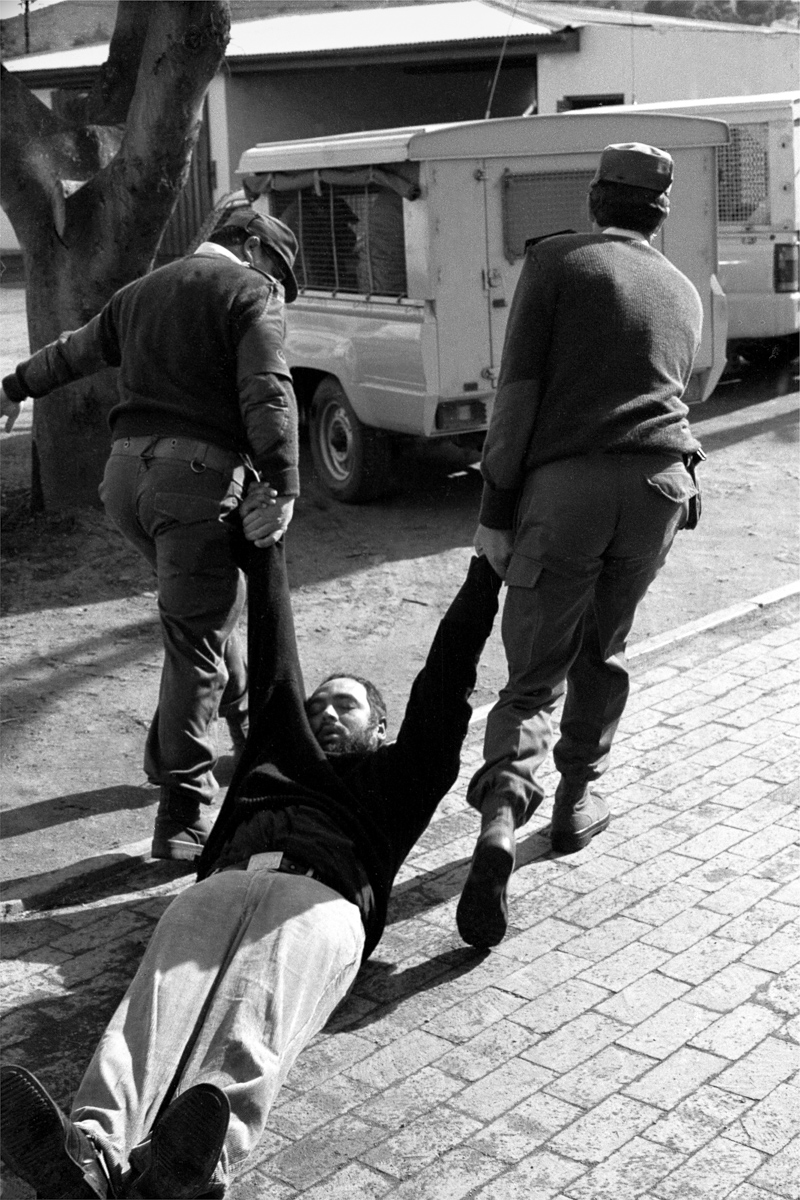
अश्रुग्यास प्रहारपछि रेभरेन्ड माइकल वीडरलाई घिसार्दै प्रहरी ।
जुन १९९० । तस्बिर सौजन्य : बेनी गूल
Rev. Michael Weeder being dragged after a teargas attack,
June 1990. Photograph by Benny Gool
रेभरेन्ड माइकल वीडरको निबन्ध
यो तस्बिर १९९० को जुनमा एसटनमा खिचिएको थियो । म एसटनमा रहेको सेन्ट जोसेफ्स र सेन्ट पल तथा नजिकै मोन्टागुमा रहेको सेन्ट मिल्ड्रेडको एङ्गलिकन मण्डलीको सेवा गर्ने पास्टर थिएँ । एसटन समुदायले पुस्तकालय र स्विमिङ पुलजस्ता नागरिक सुविधा सहरका सबै बासिन्दाका लागि खुला हुनुपर्ने माग गर्दै सानो विरोध अभियान सुरु गरेको थियो । नगरपालिका कार्यालयहरूअगाडि करिब १०० जनाको धर्ना पनि भएको थियो । केही राउन्ड अश्रुग्यास प्रहारपछि हामी धर्नाकारीको सङ्ख्या पाँच जनामा झर्यो, जसमध्ये मबाहेक सबै महिला थिए । तीमध्ये एक जना माध्यमिक विद्यालयकी विद्यार्थी थिइन् । प्रहरीले हाम्रैबीचमा अश्रुग्यास हान्ने चेतावनी दियो । एउटा चाहिँ हामीतिरै हान्यो पनि । तर एक युवकले भुइँमा ठोक्किएको देखेर पहिलो उछालमै आफ्नो पञ्जा लाएको हातले समात्यो र नजिकैको गोल्डफिस पोखरीमा हुत्याइदियो । मध्यबिहानीको घाममा आफ्ना ससाना पेट टल्काउँदै पाँच वटा जति माछा सतहमा उत्रिए । हामीलाई फेरि चेतावनी दिइयो । मैले मेरा साथीहरूलाई एक–अर्काको साथ नछोड्न भनेँ । हामी हाम्रो संयुक्त शक्तिमार्फत यो अवस्थाको सामना गर्न सक्थ्यौँ । मैले साथीहरूलाई आफ्ना आँखा बन्द गर्न, हलका गरेर साँस फेर्न र अन्धकारमा ध्यान दिन आग्रह गरेँ । अघि भनिएको अश्रुग्यास हामीबीचमा फालियो । एक छिन म बेहोस भएँ होला र सबैभन्दा अन्तिममा मलाई नजिकैको प्रहरी भ्यानतिर घिसारिएको थाहा पाएँ । अलिक परबाट कुनै प्रहरीले आफ्नो सहकर्मीलाई भन्दै गरेको सुनेँ : “यो सुँगुर कस्तो भारी रैछ !” भ्यानभित्र मसँगै पेन्टेकोस्टलकी सिस्टर थिइन्, प्रहरीलाई नर्कको आगो र परमेश्वरको क्रोध भोग्न परोस् भनेर सराप्दै थिइन् । भ्यानभित्रै पनि अश्रुग्यास प्रहार हुन सक्ने डरले मैले उनलाई हामी भ्यानबाहिर ननिस्केसम्म आफ्नो प्रवचन थाम्न अनुरोध गरेँ । धन्न, उनले मानिन् ।
हजारौँको सङ्ख्यामा क्षेत्रभर स्वतन्त्रता र्याली निकालेका बोलान्ड सहरका बासिन्दाको अटुट साहस मलाई याद छ । त्यस्ता अवसरमा हाम्रो नेतृत्व गर्दै कहिलेकाहीँ रेभरेन्ड एलन बोएसाक, रे एलेक्जेन्डर, ट्रेभर म्यानुएल, ओस्कार एम्फेटा, शेरिल कारोलसलगायतका व्यक्तिहरू पनि उपस्थित हुनु हाम्रो लागि अहोभाग्यको कुरा थियो । तर प्राय: हामी आफू–आफूमात्रै हुन्थ्यौँ । दिउँसो ठूलो बहादुरीका साथ हिँडेका मान्छेहरूलाई राति खेतबारीका एकान्त बाटोमा हिँडे भने ब्रान्डीमा भिजेका हतियारधारी जमिन्दार र तिनीहरूका छोराहरूको भीडले घेरेर कुटपिट गर्थ्यो ।
हालसालै एसटन सहर गएको बेला मैले हामीले चाहेका केही परिवर्तन मूर्त भएको देखेँ । रङ्गभेदी नियमअन्तर्गतको समूह क्षेत्र ऐन (ग्रुप एरियाज एक्ट) खारेज भएपछि रङ्गमिश्रित (कलर्ड) समुदाय र तिनका अफ्रिकी साथीहरूले एउटै गल्लीमा बस्न र सार्वजनिक सेवासुविधा सामूहिकरूपमा उपभोग गर्न पाएका थिए । तर शक्तिका आधारभूत तत्त्वहरू अझै पनि यथास्थितिमा रहेकाले हाम्रो देशका अन्य सहरमा जस्तै त्यहाँ पनि हामी अतीत बोकेरै बाँचिरहेका छौँ । अप्रिल १९९४ मा हाम्रो स्वतन्त्रताको अधिकार सुरक्षित गरिए पनि परमेश्वरका सबै सन्तानमाझ हाम्रो भूमिको सम्पत्ति बाँडफाँट गर्नको लागि सङ्घर्षको पुनरुत्थान र पुन:प्रतिबद्धताबाट मात्र यसको लाभ सुनिश्चित गर्न सकिनेछ भन्ने तथ्य गरिबी र यससँग सम्बन्धित विशाल सामाजिक समस्याहरूले हामीलाई याद गराउँछन् ।
Essay by Rev. Michael Weeder
This photo was taken in Ashton in June 1990. I was the parish priest serving the Anglican congregations of St Josephs and St Paul in Ashton and St Mildred in nearby Montagu. The Ashton community had embarked on a mini-Defiance Campaign, insisting that the civic amenities such as the library and swimming pool be open to all the town’s inhabitants. There had been a sit-in in front of the Municipal Offices numbering about 100 people. A few tear-gas canisters had reduced our number to five people, all women other than myself. One of them was a high-school student. The police warned us that they would drop a teargas canister in our midst. One was shot our way but a young fellow, seeing it hit the ground and grabbed it on the first bounce with his gloved hands and tossed it into the nearby gold-fish pond. About five of the pool’s occupants popped to the surface, their little bellies reflecting the mid-morning sun. We were warned again. I told my comrades to hold onto each other. Our combined strength would carry us through this situation. I told them to close their eyes, breath lightly and focus on the dark. The promised canister was dropped in our midst. I must have passed out momentarily and found that I was the last one being dragged to the nearby police van. As if from far away I heard the one policeman say to his colleague: “Die vark is darem f*****n swaar!”. With me in the van was a Pentecostal sister who was cursing the cops with promises of hellfire and the certainty of God’s wrath. I pleaded with her to reserve her sermon until we were out of the van because I feared being tear-gassed while inside. To my relief she agreed.
I remember the quiet bravery of the town folk of those Boland towns, who embarked in their thousands on freedom marches across the region. Sometimes we were fortunate to have the presence of people like Rev Allan Boesak, Ray Alexander, Trevor Manuel, Oscar Mpheta, Cheryl Carolus and others to lead us on those occasions. But mostly we were on our own. People who had walked with great bravery in broad daylight were set upon at night and beaten by armed mobs of brandy-soaked farmers and their sons should they venture onto those lonely farm roads.
On a recent visit to Ashton I saw that some of the changes we desired were evident. The scrapping of the Group Areas Act meant that Coloureds and their fellow Africans lived in the same street, shared communal amenities… But there, as in all the cities of our land, we are living with the past, as the fundamentals of power were still in place. Poverty and the related immense social problems serve to remind us that while April 1994 secured us the right of freedom, its benefits will only be secured by a recommitment to and a resurgence of the struggle for the sharing of our land’s wealth with all the children of God.